


AS CURATOR of the Saddleworth Museum I am asked many questions and try to find an answer to them all – but I was asked one question recently that left me with a blank page: ’how many miles of dry stone walling are there in Saddleworth?’
I suppose it is calculable if you spent long enough studying large scale Ordnance Survey maps but it left me thinking about the stone that makes up these walls, which in general forms much of the character of the moorland buildings and villages of Saddleworth. There is in actual fact very little recorded in books and little material available in the archives collection in the museum.

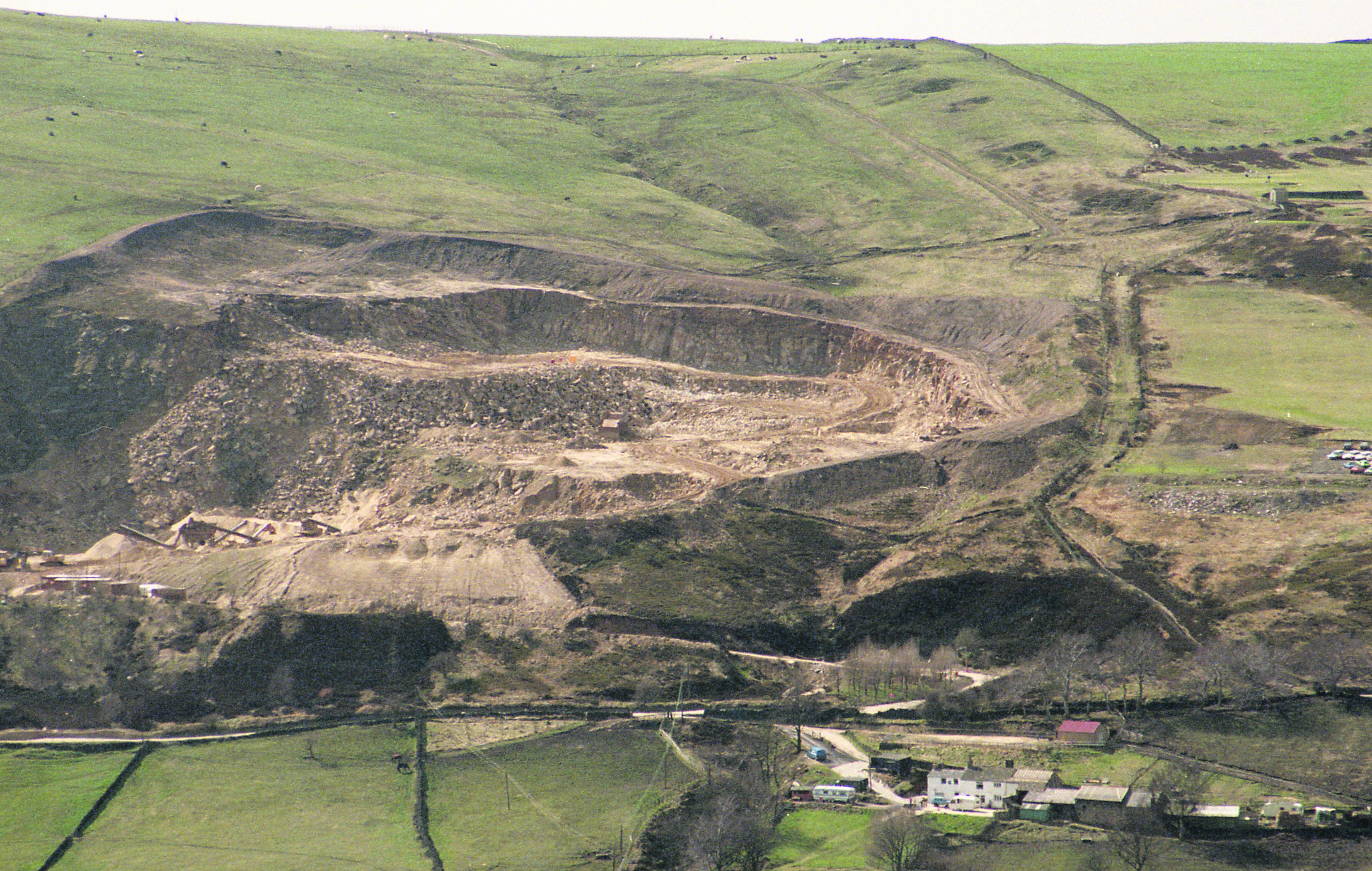
There is now not one working quarry in Saddleworth, the last probably being Wharmton quarry which finished in the 1980s. The remains of these quarries with the removal of the stone have left a statement on the landscape and yet most have blended in.
The huge quarries at Ladcastle in Uppermill now form a ‘backdrop’ to the village on the western side of the valley and one wonders what the reaction to the local population would be if a similar quarry was opened nowadays.
All these quarries, whether large or small, had a basic specialty which depended on the quality of the stone being quarried. It might be simply to supply stone chippings for roads, building dry stone walls, provide for buildings or for the best quality to provide large stones for lintels or mill engine beds etc.
There was a lot of material in the process of quarrying that was wasted and ended up on spoil heaps but if you walk the hills of Saddleworth you cannot help but wonder why. People only have to look towards Pots and Pans at these huge tips that in themselves have become a feature of the landscape, and for that matter a home for the mountain hare.
The quarrymen who worked the stone must have been very hardy men and it was certainly a dangerous place to work and the local papers record numerous accidents with some fatal.
The other hardship for those working outside was the weather which was often not very favorable, the papers recording what was typical when in the winter of 1879 quarry masters working at High Moor had been employed for only eleven days out of a thirteen week period.
There is one curious incident recorded during the construction of the Yeoman Hey Reservoir in Chew Valley in Greenfield, a quarry which had been opened up just below Binn Green (site of the current picnic site. A huge stone was quarried that was so big it was felt worthy enough to be blessed by the vicar.
If you have any records that relate to the quarrying industry in Saddleworth, whether stone, coal or clay, we would love to hear from you – please contact Peter Fox the Saddleworth Museum Curator on 01457 874093 or email curator@saddleworthmuseum.co.uk

You must be logged in to post a comment.