


People in Saddleworth usually know when a familiar watercourse looks wrong. A brook that usually runs clear after a dry week can turn cloudy after rain. Foam may gather near a culvert. A smell can sit around one bend and vanish by the next bridge. Sometimes nothing looks unusual at all, which is why river checks cannot rely on sight alone.
Lab testing gives those observations something firmer to stand on. It helps show whether a change is harmless, local and short-lived, or whether the same signal is appearing again in the same part of the catchment.
Why local river checks cannot wait
Saddleworth sits around the upper River Tame and the smaller brooks that feed the wider catchment. Water moves past homes, roads, fields, footpaths and older sites where drainage has changed many times. That mix makes monitoring useful even when there is no obvious incident.
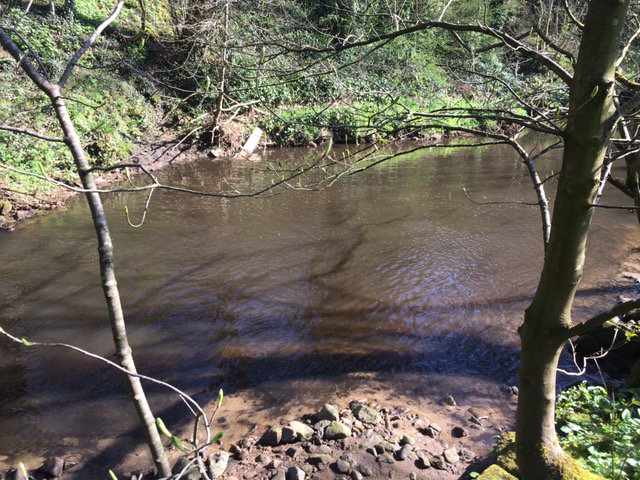 Rain is often the moment when small pressures become easier to see. Runoff from roads, disturbed soil, farm tracks, blocked drains or building work can move quickly into streams. In dry weather, a slow change may show up in oxygen levels, pH or the way plant growth collects in shallow water.
The point of regular testing is not to make every cloudy patch sound alarming. It is to notice patterns. If one location keeps producing similar results after wet weather, or if a reading changes sharply near a known outfall, officers have a better reason to look closer.
What a sample can show
A water sample is only useful if it is collected and handled with care. The person taking it needs a clear location, a time, a reason for the visit and the right container. A bottle from below a road drain tells a different story from one taken upstream in open water.
In the lab, the same sample may be checked in several ways. Some tests look at nutrients, because raised phosphate or nitrate can point to runoff, sewage inputs or other sources that need investigation. Other tests look at metals, organic load, acidity, alkalinity, chloride or hardness. The lab is not looking for one neat answer. The point is to build a picture that fits the place and the complaint.
A single result still needs caution. Heavy rain can dilute one substance and wash another into the river. Warm weather can make low oxygen more likely. Slow water can hold material that would move on during a stronger flow.
Where titration earns its place
Some river checks need a measured chemical reaction, not a colour change guessed by eye. For laboratories that need repeatable titration results across water samples, a titrator gives the process a controlled endpoint instead of leaving the call to manual judgement. It adds reagent in measured amounts until the reaction reaches its endpoint, then records the value used to calculate alkalinity, acidity, hardness or chloride.
That matters because environmental samples are rarely tidy. They may contain sediment, organic material or traces of several inputs at once. When a lab is handling repeated samples from the same stretch of river, the method needs to behave consistently from one run to the next.
Automated titration also helps when results must be checked later. The lab can keep a clearer record of the method, sample, endpoint and calculation. That paper trail becomes important if the result leads to more sampling, a discussion with a site operator or a formal investigation.
How field notes change the result
A lab number does not mean much on its own. Field notes can change how it is read. A low oxygen result means more when officers also saw dead fish, slow flow or a smell of sewage. A high chloride result may raise different questions if the sample came from a road drain after winter road treatment, especially where road runoff enters the same stretch after rain.
Local reports matter for the same reason. Walkers, anglers and residents often spot changes between scheduled visits. They know when a familiar stretch looks different, when litter has gathered in a new place or when discoloured water appears after the same type of weather.
Those reports do not replace formal testing. They help point it in the right direction. A good report gives location, time, photos if safe to take, and a clear description of what changed. The sample then gives the observation a stronger footing.
What residents can take from the data
Most people will not read a full laboratory report for a local river. They do not need to. Public tools, including the Environment Agency’s Catchment Data Explorer, can still show whether a water body is meeting ecological and chemical expectations, and whether the wider pattern is improving or slipping back.
For local groups, that information can support practical questions about whether a problem shows after heavy rain, whether one stretch has changed more than another and whether drainage works, planning decisions or habitat projects are being discussed with enough evidence behind them.
The data is not perfect, and it is not a substitute for looking at the river itself. It does give residents a way to move beyond frustration. When people can point to a classification, a repeated concern or a reason to report an environmental problem, it becomes harder to brush the concern aside.
Why steady testing matters
River monitoring is patient work. Most of it happens away from the footpath, in sample bottles, field logs, instruments and lab records. Its value shows when a small change is caught before it becomes a larger problem downstream.
Testing cannot clean a river on its own. Drainage, land use, maintenance, public reporting and enforcement still have to do their part. Lab results give those decisions a firmer base because they turn suspicion into evidence.
Around Saddleworth, that matters because the rivers and brooks are close to daily life. People walk beside them, live near them and notice when they change. Steady testing gives those observations somewhere to go, without treating every concern as guesswork.

You must be logged in to post a comment.