


AN AWARD-WINNING pianist who has been a star since she was a teenager has brought her talents to Uppermill.
Rose McLachlan was only 13-years-old when she debuted at the Edinburgh Fringe Festival. She was 14 when she won the Scottish International Youth Prize at the Royal Conservatoire of Music, and she was 15 when she won the Yamaha Prize in the 2017 EPTA UK Piano Competition.

After turning 16, she won two awards with the Chetham’s Symphony Orchestra and at 17 she won the junior intercollegiate Beethoven Piano Society of Europe competition.
Now 24, she is fresh off the back of her latest performance – this time to the homely hills of Saddleworth after her first time at the Uppermill Music Festival on Thursday, July 9. But it was an adventure she had long been excited for.
“We tried to choose pieces that are very well-loved piano duets,” she said of her joint performance with her brother Matthew, 25.
“We don’t have that many opportunities to play together, so it’s actually really nice that we can do this.
“Rehearsing with family members is different than other people, you don’t have to worry as much about how you say things, and we know each other very well.”
It all started at the age of seven, when she began piano lessons with her father, ‘who always has these big ideas for our family,’ she laughs.
“We all learned when we were young,” Rose added. “I have two older brothers who were both pianists, an older sister who learned as well, and a younger brother who learned, and is now a football player.”
After ageing out of being a chorister at 13, she started treating her piano skills more seriously than ever, eventually going on to win a slew of awards throughout her teenage years and adulthood.

A stint at the Chetham’s School of Music led to the Royal Northern College of Music, which in turn led to a Masters at the Guildhall School of Music and Drama.
Broadcasts on BBC Radio 3 became commercial recordings for Divine Art Records and international performances with musical greats including Jean-Efflam Bavouzet and Andrea Nemecz.
“I still feel like I’ve got a long way to go,” she says regardless. “I feel like you’re always trying to get better and better, but I’m just grateful to have opportunities to play. I’m very privileged to have come from a family where we had a piano in the house and access to lessons.”
An unequal playing field in the world of music is something Rose is keenly aware of. Figures from the Independent Society of Musicians show a 36 per cent drop in students taking GCSE Music since 2010 – and a staggering 45 per cent drop in those taking it for A-Levels.
It comes as schools continue to slash music education in favour of subjects prioritised in performance metrics, such as maths and science. Just 15 per cent of students in state schools receive sustained music tuition, compared to 50 per cent of those attending private schools.
“Even just with piano, you obviously need an instrument to practice at home,” Rose says. “Then there’s paying for lessons. A hundred years ago, maybe less, it was a skill that most people had, to play. And that just seems to have been lost a little bit now.”
It was enough to send Rose to roll up her sleeves, and get stuck in in helping aspiring musicians.
“I did the Hastings Piano Competition, and they have a big outreach programme,” sh told Saddleworth Independent. “I went to schools in the area that were quite deprived and didn’t have access to music.
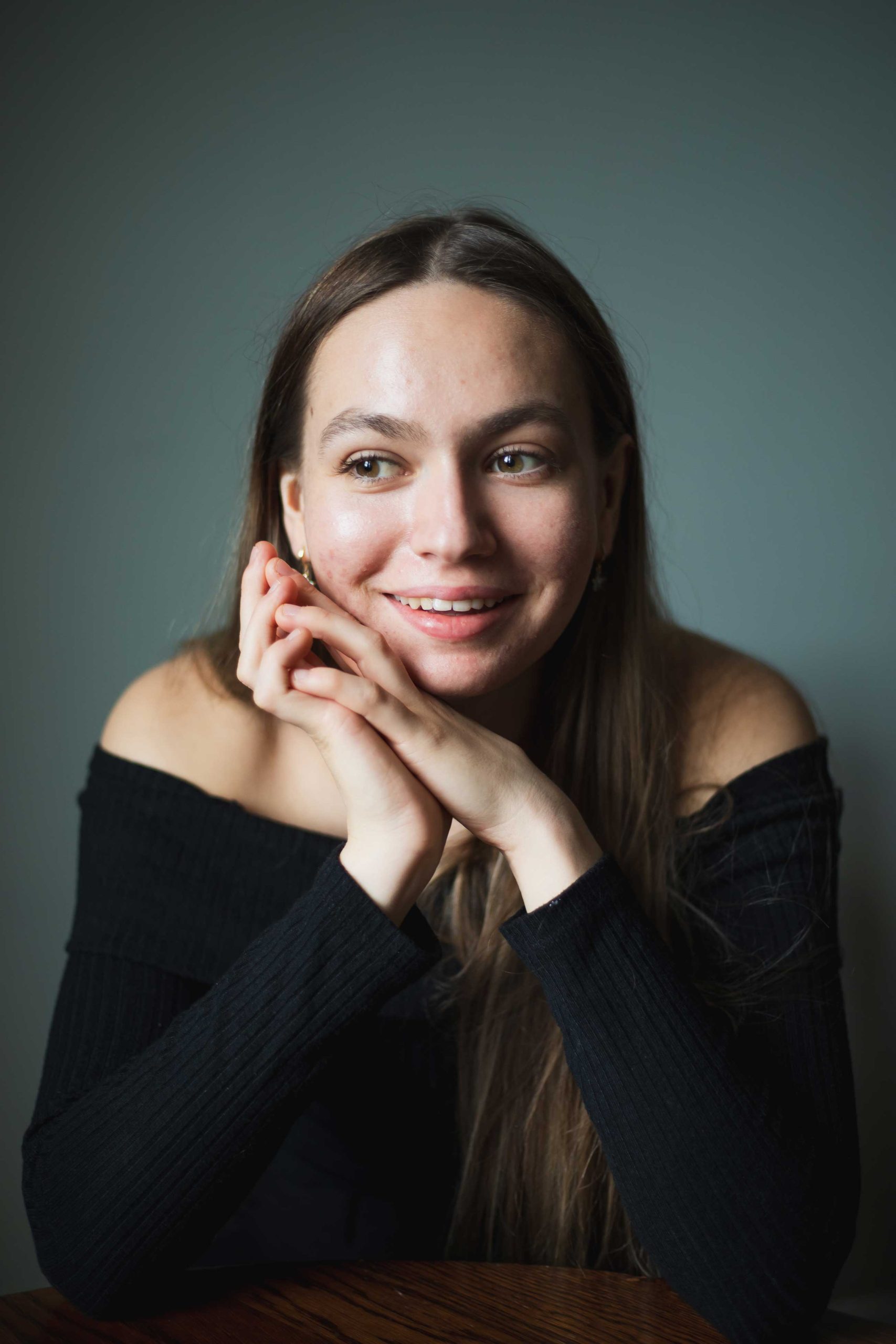
“When I was at the Royal Northern College of Music, my piano teacher Helen Krezos ran a pedagogy course, so we went around schools in Manchester teaching kids there who had never learned before. We would provide them all with keyboards and things.”
It was a valuable opportunity, according to Rose, but the most surprising thing how much of what she taught reflected back at her. She says teaching the children taught her new ways to think and explain music to others, and pushed her into becoming a better artist herself.
“It gives you a bigger perspective of what’s important,” she says. “I feel like if you don’t do any of that, and you’re just practicing by yourself and playing, I’ve found that I’ve become less worried about things I shouldn’t be worried about, and have more gratitude for where I am.”
Where she is now is the tail end of a postgraduate degree, but beyond the summer will be a mystery.
Though she now teaches formally at a school in North London, she has no plans to stop playing of her own accord, insisting: “I think the ideal life for me is just a wide variety of things, like teaching and playing concerts. I love accompanying as well.
“We get such a variety of people. [Some] come to concerts and know a lot about music, and then there’s people for whom it’s their first ever concert. I love doing outreach stuff in schools and playing to kids and introducing them to classical music.
“I just love playing no matter where, and so I’m very grateful that I can do that.”

You must be logged in to post a comment.